Power BI really shines when you give it relational data to work with - tables, relationships and enough history to spot a trend. Unfortunately, querying the Chargebee API directly from Power BI is slow, fragile and quickly runs into rate limits. The better approach is to stage your Chargebee data in a database first, then let Power BI do what it does best: interactive dashboards, drill-downs and combining Chargebee with the other systems your business runs on.
In this article, I’ll take you through the steps to connect Power BI to your Chargebee data, and get started customizing the reports you need.
Connect to Chargebee
If you don’t already have a SyncHub account, you can grab a free trial here - go on, I’ll wait - it only takes a minute and you can cancel as soon as you’ve finished this tutorial if you like.
Ready? Now, a quick reminder - SyncHub works by staging your Chargebee data in a relational database. This gives us a huge advantage over other connectors which query the Chargebee API directly, but I won’t go in to them here. The point is, once you have connected your Chargebee account, querying from Power BI is trivial as you are just using its native SQL Server Connector.
Once connected, you'll find data from all these endpoints streaming down from Chargebee, such as this example from the Subscription table:
| ID | CurrencyCode | Status | WhenCreatedAt | CancelReason | PlanAmountInDecimal |
|---|---|---|---|---|---|
| sub_ABC12345 | USD | active | 2024-03-01 10:30:00 | NULL | 408.27 |
| sub_XYZ67890 | EUR | paused | 2024-02-15 09:00:00 | not_paid | 58.97 |
| sub_PQR54321 | AUD | cancelled | 2024-01-20 15:45:00 | NULL | 469.03 |
After connecting, visit your SyncHub Dashboard and grab your new database credentials - you'll need them below.
Reading your Chargebee data from Power BI
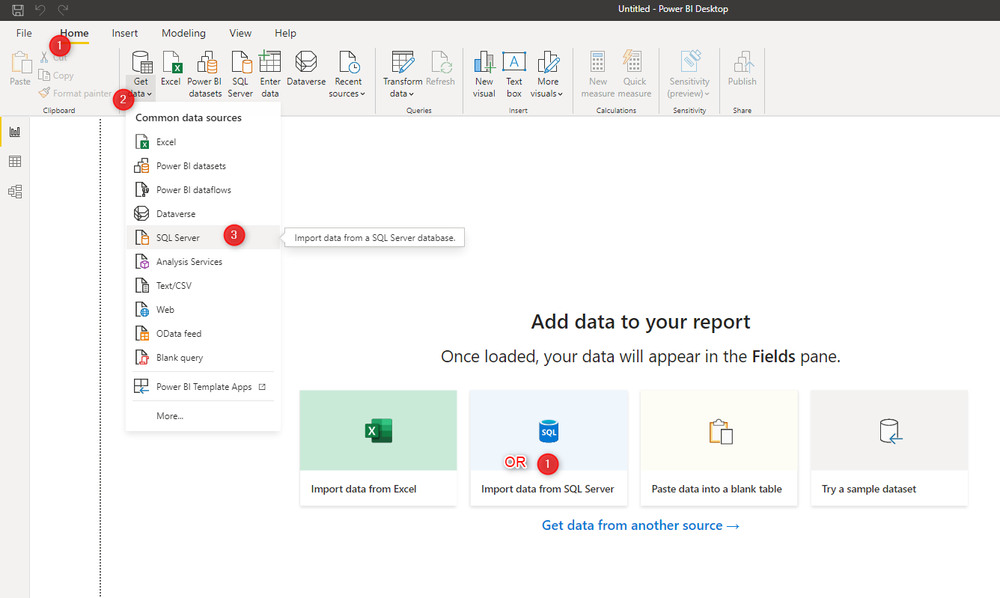
We now just need to tell Power BI where to find your data. Either select Import data from SQL Server or a new SQL Server connection from the Data ribbon:
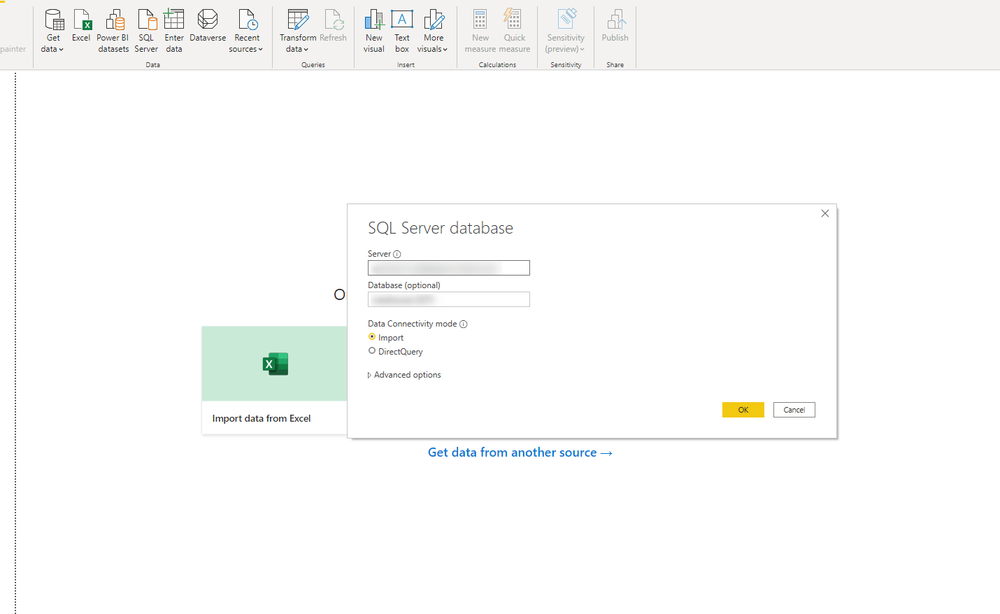
When prompted, enter the Server and Database that SyncHub provided in the first step above:
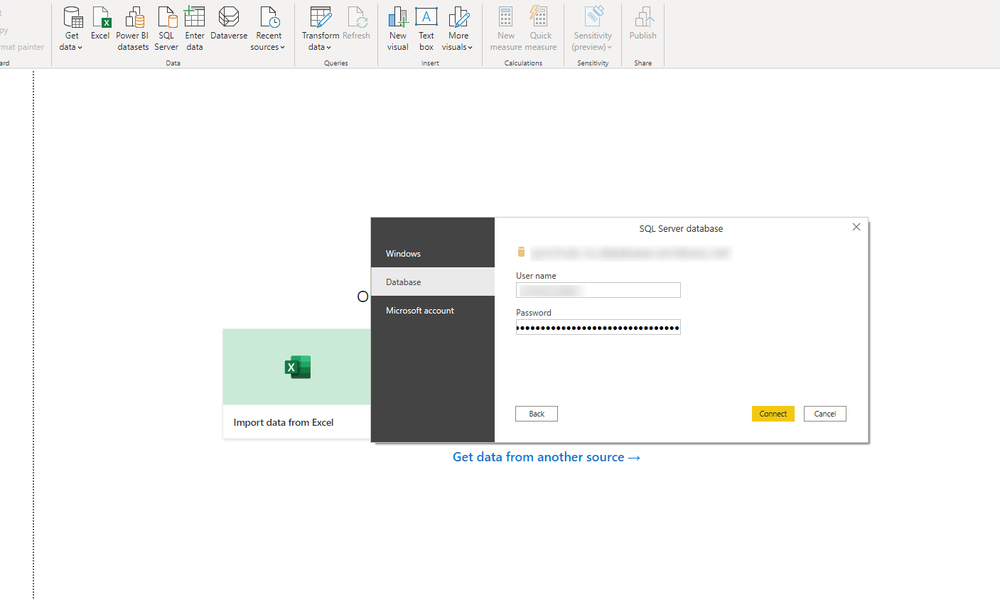
Next - and this is the part that trips most people up - switch to the Database credentials tab (highlighted by the arrow below), then enter the username and password provided to you by SyncHub in the step above:
Troubleshooting
This is the point where you are most likely to run into issues - your login won’t be accepted. After triple-checking that you have used the correct server/database/username/password, the most common resolutions we see are:
- try opening Power BI in Administrator mode
- if you are in an office, perhaps you have some firewall restrictions?
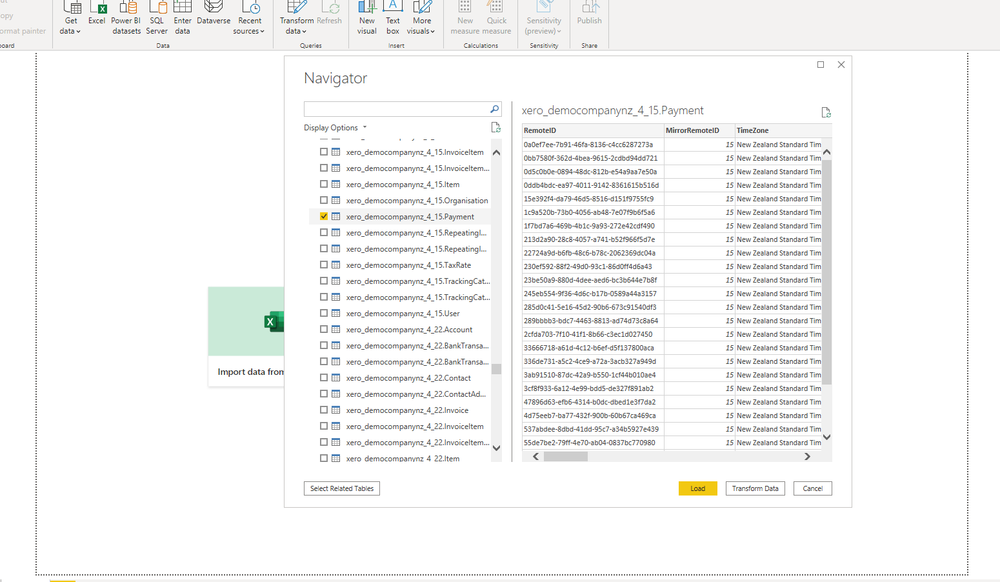
All going well, you’ll now be presented with the tables from Chargebee, and you know what to do from here:
Keeping your data up-to-date
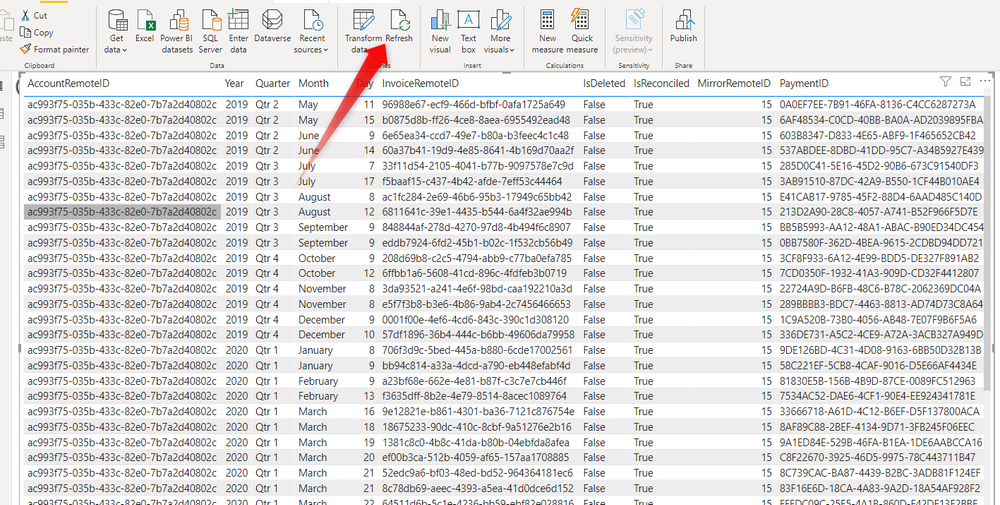
SyncHub updates it’s staged data from Chargebee in near-realtime, so it’s always available. However, depending on your Power BI settings you may still observe a delay with your reports. But not to worry - the solution isn’t too onerous. Every time you want to refresh your data, simply click the (appropriately named) Refresh button in your Ribbon:
Beyond Chargebee
Chargebee-specific reports are essential, but the true power of SyncHub comes when you augment your Chargebee data with additional information:
- SyncHub allows you to pull in data from multiple Chargebee accounts, and compare/report/aggregate from within the same report. See this blog article for details on aggregating your Chargebee data.
- Most businesses use multiple cloud platforms. SyncHub provides connectors to a wide range of popular cloud platforms. Imagine the insights you could gather by consolidating this information into a single dashboard (or see this case study for real-world examples).
So what are you waiting for? Grab a free trial of SyncHub here and see what you can do. In ten minutes from now, you could be reporting against your Chargebee data and taking your first steps towards a data-driven business.